

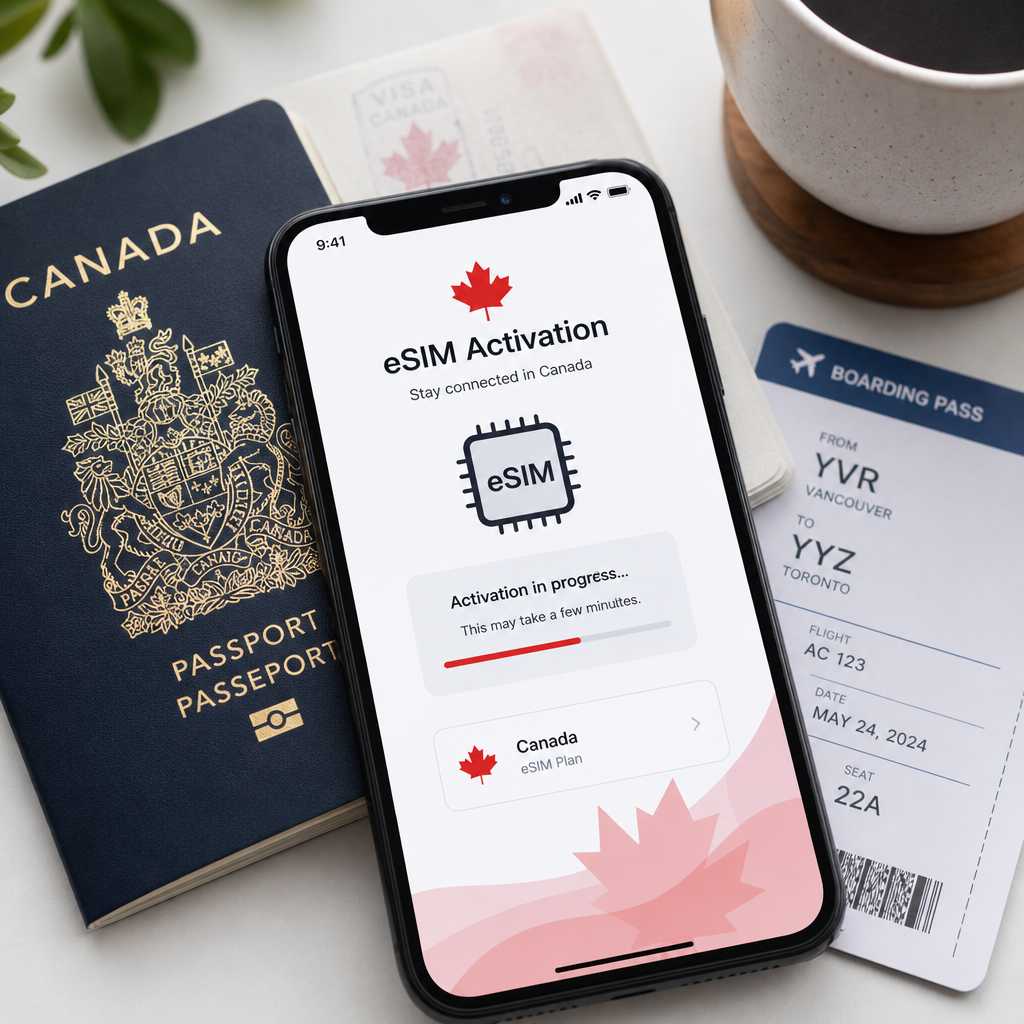
Most international students realize they need a Canadian phone number only after landing at the airport, standing in a queue with no data, no way to call their university contact, and a SIM card kiosk charging double the going rate. This guide solves that problem before it happens. If you want a canadian phone number before arrival, the process is straightforward once you know what options actually work from overseas, which ones fail silently, and which provider gives you the best value for your situation as a student or visitor.
Table of Contents
- Quick Takeaways
- Why Getting a Number Before You Land Matters
- How eSIM Makes a Canadian Number Possible From Abroad
- Step-by-Step: How to Get a Canada Phone Number Abroad
- Comparing Your Options: eSIM vs Physical SIM vs Roaming
- What to Look for in a Canadian Mobile Plan as an International Student
- Common Mistakes Students Make When Getting a Canada Number
- PhoneBox and Why It Fits International Students Specifically
- Frequently Asked Questions
- References
Quick Takeaways
| Key Insight | Explanation |
|---|---|
| eSIM is the fastest way to get a Canadian number before arrival | You can purchase, activate, and receive a Canadian phone number entirely online before boarding your flight, with no physical SIM required. |
| Your device must be unlocked and eSIM-compatible | Most flagship phones from 2019 onward support eSIM, but devices purchased on contract in some countries may be carrier-locked. Check before buying a plan. |
| A Canadian number is required for university portals and banking | Canadian banks and most university two-factor authentication systems require a local phone number. International numbers are frequently rejected. |
| No-contract prepaid plans are better for students than locked contracts | Long-term contracts through carriers like Koodo or Fido require a Canadian credit history or a large deposit. Prepaid and monthly no-contract plans from PhoneBox do not. |
| International calling minutes matter more than most students expect | Calling home frequently is a real need. Plans that bundle international minutes save significantly compared to per-minute roaming charges. |
| Coverage runs on major Canadian networks regardless of who you buy from | MVNOs like PhoneBox operate on the same national infrastructure as the big carriers, meaning network quality is not a valid reason to overpay at a major carrier. |
| Setup before arrival removes airport stress entirely | Activating your plan at home means you land with working data, a local number, and the ability to contact your housing, school, or family from the moment you clear customs. |
Why Getting a Number Before You Land Matters
Arriving in Canada without a local number creates a chain of problems that compound quickly. Your university needs to send SMS verification codes. Your bank account application requires a Canadian mobile number. Your landlord wants a local contact. Your emergency contacts at the institution expect to reach you on a Canadian line. Every one of these systems defaults to a local number and either rejects international numbers outright or charges you to find out they do not work.
The practical reality is that the airport SIM card kiosk option is overpriced, often requires proof of Canadian address, and may not be available in the terminal you arrive in. Waiting until you land to sort out connectivity is a bet against yourself on one of the most logistically demanding days of your move.
Getting an international student phone number canada sorted before departure also means you can coordinate your pickup, confirm your student housing arrival time, and contact emergency services using a local number the moment you clear customs. That is not a luxury. It is basic safety infrastructure for someone arriving in an unfamiliar country.

How eSIM Makes a Canadian Number Possible From Abroad
An eSIM is a digital SIM card embedded directly in your phone. Instead of visiting a store or waiting for a physical SIM card to arrive in the mail, you scan a QR code or enter an activation code, and your phone downloads the carrier profile. The entire process takes under 10 minutes on a compatible device with a stable internet connection.
This is what makes getting a canada number from overseas actually viable. Before eSIM technology became widespread, the only realistic options were international roaming (expensive), waiting until arrival (risky), or using VoIP workarounds that did not work with banks or SMS-based verification systems. eSIM eliminates all three of those problems.
Which Devices Support eSIM
Apple iPhone XS and later, Google Pixel 3 and later, Samsung Galaxy S20 and later, and most flagship devices from Huawei, Motorola, and OnePlus released after 2020 support eSIM. If your phone was purchased on a carrier contract in countries like China, Hong Kong, or some markets in South Asia, it may be carrier-locked and require unlocking before an eSIM from another provider will work.
The safest check is to contact your current carrier and ask if your device is unlocked and eSIM-compatible. Do this at least one week before your intended activation date.
How eSIM Activation Works With PhoneBox
PhoneBox is Canada’s leading eSIM provider for exactly this use case. You visit the PhoneBox website, choose a monthly or prepaid plan, enter your email and basic information, and receive an eSIM QR code. Scan it, follow the on-screen prompts, and you have an active Canadian number. You do this from your home country, days before your flight, with no Canadian address or credit history required.
“Canada has one of the fastest-growing international student populations in the world, with over 800,000 study permit holders as of 2023.” – Immigration, Refugees and Citizenship Canada (IRCC)
That volume of students arriving with connectivity needs is exactly why having a provider purpose-built for this transition matters. Most traditional Canadian carriers are not set up to process sign-ups from overseas.
Step-by-Step: How to Get a Canada Phone Number Abroad
The process below is specific to getting a working Canadian number via eSIM before your arrival. Follow these steps in order.
Step 1: Confirm Your Device is Unlocked and eSIM-Ready
Contact your current mobile carrier and ask two questions: Is my phone unlocked? Does it support eSIM? Both must be true for this to work. If your phone is locked, request an unlock. Most carriers will unlock a device that is paid off, but processing takes 3 to 7 business days in many countries.
Step 2: Choose Between a Monthly Plan and a Prepaid Plan
Monthly plans from PhoneBox run on a 30-day cycle with no annual contract. These include unlimited talk and text, a defined data allotment, and international calling minutes to countries including China, India, South Korea, and other common student home countries. Prepaid plans offer a set amount of talk, text, and data that you use until it runs out, then top up. For most students arriving for a full academic year, the monthly plan offers better per-day value.
Step 3: Sign Up and Receive Your eSIM
Go to the PhoneBox website, select your preferred plan, and complete the sign-up form. You do not need a Canadian address at this stage. Your eSIM QR code is delivered by email. Keep that email accessible on a second device, because you will need to scan it from your primary phone.
Step 4: Install the eSIM Profile
On iPhone: go to Settings, Cellular, Add Cellular Plan, then scan the QR code. On Android: go to Settings, Network, SIM cards or Mobile Network, then Add eSIM. The exact menu path varies slightly by device model. The process takes under five minutes if your internet connection is stable.
Step 5: Set Your Activation Date
PhoneBox allows you to choose when your billing cycle begins. Set it to your arrival date or the day before so your plan is active when you land. There is no reason to start paying days before you need service. This is a detail many students overlook when they rush the setup.
Pro tip: Install the eSIM while connected to your home Wi-Fi, not mobile data. Some carriers in certain countries block eSIM downloads over cellular data due to roaming restrictions.

Comparing Your Options: eSIM vs Physical SIM vs Roaming
International students looking to get canada phone number abroad typically face three options. The table below compares them honestly, without inflating the weaknesses of eSIM to appear balanced.
| Option | Can Be Set Up Before Arrival | Cost and Contract Requirements |
|---|---|---|
| eSIM (e.g., PhoneBox) | Yes. Fully set up online from your home country. Canadian number active before you board your flight. | No contract required. Monthly or prepaid. No Canadian credit history needed. Plans start at competitive rates for students. |
| Physical SIM at arrival (airport or store) | No. Must be purchased after landing. Airport kiosks are significantly more expensive than standard retail rates. | No contract for prepaid options, but you pay a premium for convenience. Store purchases require visiting a physical location, often in an unfamiliar area. |
| International Roaming on your home carrier | Yes, technically, but you keep your foreign number, not a Canadian one. Banks and universities will reject this number for SMS verification. | Daily roaming fees range from $10 to $20 CAD per day depending on your home carrier. Unsustainable for any stay longer than a few days. |
The verdict is straightforward. Roaming is not a real solution for students staying longer than a weekend. Physical SIM at arrival works but adds friction and cost on an already demanding travel day. eSIM set up in advance is the clear choice for anyone organized enough to sort it out before their flight.
What to Look for in a Canadian Mobile Plan as an International Student
Not all Canadian mobile plans are built for the same customer. The plans offered by Koodo, Fido, and Freedom Mobile are designed primarily for long-term Canadian residents with a credit history and a permanent address. Students arriving on study permits often run into friction when applying for these plans. Here is what to prioritize instead.
No Long-Term Contract Requirement
A two-year contract makes no sense for a student on a one or two-year study permit. Beyond the mismatch in duration, breaking a contract early triggers penalties that can run into hundreds of dollars. Look for month-to-month or prepaid plans specifically.
International Calling Minutes to Your Home Country
PhoneBox plans include international calling minutes to over 60 countries. This is a material benefit, not a marketing line. Students consistently underestimate how much they will call home, especially in the first semester. Plans that include these minutes upfront are almost always cheaper than adding them later as an add-on.
Multilingual Support
PhoneBox offers 24/7 customer support in 13 languages, including Mandarin, Hindi, Korean, Japanese, Arabic, and others commonly spoken by international students in Canada. This matters when you have a billing question or an activation issue and English is your second language. None of PhoneBox’s major competitors offer this at the same level.
Self-Serve Plan Management
The PhoneBox app lets you manage your plan, check usage, add data, and change your plan entirely from your phone. For a student adjusting to a new country, not having to visit a physical store to change a plan is a genuine quality-of-life improvement.
Pro tip: When comparing plans, calculate the per-GB cost and include the value of any bundled international minutes. A plan that costs $5 more per month but includes 100 international calling minutes can save you $15 to $30 in add-on charges.
Common Mistakes Students Make When Getting a Canada Number
A common mistake is assuming that any phone number in a North American format will work for Canadian services. US numbers, VoIP numbers from apps like Google Voice, and numbers issued in other countries all fail SMS verification for Canadian banks, university two-factor authentication systems, and government portals. You need an actual Canadian number issued by a Canadian carrier.
Another frequent error is waiting until arrival and then discovering the airport SIM kiosk only sells prepaid starter kits with minimal data. Students then use up their data in the first week navigating an unfamiliar city, then spend time hunting for a top-up rather than settling into their new environment.
A third mistake is not checking whether their home device is locked before purchasing an eSIM plan. This is fixable before departure but cannot be fixed at the airport. Allow at least a week to request and receive an unlock from your home carrier.
Finally, some students choose the cheapest possible plan without considering data needs. University life involves Google Maps constantly, file downloads, video calls home, and research tasks. Underestimating monthly data usage is a mistake that results in throttled speeds at exactly the moments you need them most. For most students, a plan with at least 5 GB of monthly data is a practical minimum.
PhoneBox and Why It Fits International Students Specifically
PhoneBox was built for exactly the demographic that most Canadian carriers ignore in their product design: people arriving in Canada without a credit history, a permanent address, or a prior relationship with a Canadian financial institution. The sign-up process works entirely online, accepts international payment methods, and does not require a Canadian Social Insurance Number or credit check.
The combination of eSIM activation before arrival, no-contract monthly plans, international calling minutes, multilingual support, and a self-serve app makes PhoneBox the most complete package for international students specifically. Competitors like Koodo and Fido offer strong coverage, but they are not optimized for someone onboarding from overseas with no Canadian footprint.
PhoneBox operates on major Canadian network infrastructure, so coverage quality is equivalent to what the large carriers offer. You are not trading down on network quality by choosing an MVNO. You are choosing a provider whose product was built for your situation.

Frequently Asked Questions
Can I get a Canadian phone number while still in my home country?
Yes. With an eSIM provider like PhoneBox, you can purchase a plan, receive a QR code by email, and activate a real Canadian phone number entirely from your home country before your departure. The only requirement is an unlocked, eSIM-compatible smartphone and an internet connection.
Does a Canadian number from an MVNO like PhoneBox work for bank SMS verification?
Yes. PhoneBox numbers are issued on Canadian carrier infrastructure and are recognized as standard Canadian mobile numbers. They work for two-factor authentication at Canadian banks, university portals, and government services. VoIP numbers from apps like WhatsApp or Google Voice do not work for this purpose.
What if my phone is carrier-locked?
A locked phone cannot accept an eSIM from a different carrier. Contact your current carrier and request an unlock before your departure date. Most carriers will unlock a paid-off device, but the process can take 3 to 7 business days. Do not leave this until the night before your flight.
Is it better to get a monthly plan or a prepaid plan as an international student?
For students staying a full academic year or longer, a monthly no-contract plan is almost always better value. Prepaid plans are better for short visits or when you are unsure about your length of stay. Monthly plans from PhoneBox include unlimited talk and text plus international minutes, which gives better per-day value than topping up a prepaid balance repeatedly.
How long does it take to activate a PhoneBox eSIM?
The activation process takes under 10 minutes on most compatible devices. Once you scan the QR code and your phone downloads the carrier profile, your Canadian number is live. PhoneBox also allows you to schedule your activation start date so you can set everything up days in advance without your billing cycle starting early.
Can I keep my PhoneBox number after I graduate and stay in Canada permanently?
Yes. PhoneBox offers month-to-month plans with no long-term contract, which means you can keep your number as long as you continue renewing your plan. There is no requirement to switch to a different plan type after your student status changes, though you can adjust your plan at any time through the app.
If you have gone through the process of setting up a Canadian phone number from abroad, share what worked or what you wish you had known sooner in the comments below.
References
- Immigration, Refugees and Citizenship Canada official information on study permits and international student data
- Statista research and statistics on international student mobility and mobile connectivity trends
- Forbes reporting on eSIM adoption, mobile technology trends, and consumer mobile plan comparisons
- GSMA industry data and technical standards for eSIM technology and global mobile network compatibility
- Innovation, Science and Economic Development Canada telecommunications regulations and Canadian carrier licensing information